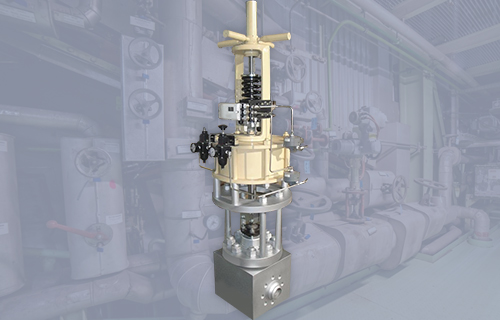
Steam Jet Air Ejector (Turbine Vacuum System)
The efficiency of a Steam-turbine is mainly determined by the pressure of the steam at its outlet. The Turbine Surface Condenser is therefore maintained under vacuum. To enable this, the Steam Jet Ejector Vacuum System must be capable of removing all non condensable and associated water vapour from the Surface Condenser to produce the minimum steam condensing pressure consistent with physical dimensions and heat transfer and to provide for deaeration of the condensate.
The sources of non condensables include air leakage through all system components operating below atmospheric pressure, gases released from feedwater drains and vents admitted to the condenser, gases released for make-up admitted to the condenser, condensate surge tank when utilized in a closed cycle and disassociation of feedwater into oxygen, hydrogen and non condensables.
Jet Flow Technologies is a renowned manufacturer of steam jet air ejectors and designs vacuum ejector systems and condenser evacuation systems to ensure efficient operations of steam turbine condensers in optimal vacuum. The steam jet air ejectors help in the elimination of non-condensables and moisture from the surface condenser of the steam turbine, enhancing the effectiveness of the turbine, lowering back-pressure, and expanding equipment life.
How a Steam Jet Air Ejector Works
The steam jet air ejector is used to evacuate air and other non-condensable gases from the steam condenser to maintain the necessary vacuum and support effective turbine operation. Its working mechanism depends on high-pressure motive steam, gas entrainment, and pressure recovery through a diffuser.

Working Principle of a Steam Jet Air Ejector
- Motive Steam Enters the Nozzle - Motive steam at high pressure enters a specially designed converging-diverging nozzle. Expansion of the steam through the nozzle transforms the pressure energy into velocity energy and creates the low-pressure zone necessary for the suction of gases.
- Air and Non-Condensable Gases Are Entrained - The high-velocity steam jet extracts air, steam vapor, and other noncondensable gases from the surface condenser. The extraction of these gases ensures that the condenser vacuum is maintained to minimize back pressure on the steam turbine.
- Steam-Gas Mixture Passes Through the Diffuser - The entrained gas and motive steam create a high-speed mixture which is then introduced to the diffuser. This diffuser ensures that the speed of the mixture is reduced, while at the same time converting the kinetic energy into pressure, enabling the mixture to discharge against the needed downstream influence.
- Multi-Stage Ejector Design for Higher Vacuum - For implementations requiring deeper vacuum levels, a multi-stage steam ejector can be used. A three-stage steam ejector uses numerous ejector phases and intercondensers to gradually compress and eliminate non-condensable gases, making it favourable for demanding the application of turbine condensers.
- Duplex Arrangement for Continuous Operation - A twin-element or duplex configuration provides operational reliability and ensures no disruptions because of malfunctioning or breakdown. This is crucial because one ejector can remain in service while the standby unit is available for exchange, examination, or maintenance. This arrangement is particularly beneficial for a steam jet air ejector for power plants, where maintaining condenser vacuum is crucial to constant turbine operation.
The recommended design pressure of the Steam Jet Air Ejector (SJAE) System is as follows :
- Design Pressure : For electric power generation service, the standard design pressure for an ejector is 0.035 ata (25.4 mm Hg absolute). For mechanical drive implementation, the design pressure is typically based on the condenser design pressure minus 0.035 ata. These pressure conditions help the ejector retain the needed condenser vacuum during operation.
- Twin Element (Duplex) Configuration : A twin-element or duplex Steam Jet Air Ejector uses two identical ejector elements at each stage. One element operates while the second remains on standby. This arrangement allows the standby unit to be brought into service when required, supporting uninterrupted vacuum maintenance and easier maintenance without shutting down the complete system.
- Hogger / Start-Up Ejector : A hogger or start-up ejector is used for rapid pre-evacuation of the condenser during plant start-up. It quickly removes large quantities of air before the normal holding ejector takes over. A silencer is typically provided to reduce discharge noise during operation. The hogger operates only until the required holding vacuum is established.
- Hybrid Vacuum System : A hybrid vacuum system combines a Steam Jet Air Ejector with a liquid ring vacuum pump to provide greater flexibility under varying operating loads. This configuration can be suitable where vacuum demand changes significantly during start-up, normal operation, or part-load conditions.
Usually, the SJAE system is of Twin Element type i.e. of duplex design having
two
identical Ejectors per stage, one of which, being in operation at any one time
and
the
other as stand-by. The Inter and After Condensers
are generally Single Element type.
The System also includes a Hogger / Start-up Ejector with Silencer for fast pre evacuation and which is in operation only till the desired vacuum has been achieved. Thereafter, the two stage holding ejectors take over.
In this field of application, combination units with Ejector and Surface Condenser coupled Liquid Ring Vacuum Pump are also becoming popular.

Industries We Serve
The Steam Jet Air Ejectors and vacuum systems offered by Jet Flow Technologies are ideal for use in industries where the need for reliable vacuum creation, condenser operation, and non-condensable gas elimination is crucial.
Power Generation Industry
Installed in thermal power plants as hogging and holding ejectors to continuously remove air and non‑condensable gases from steam turbine condensers.
Petrochemical & Chemical Processing Industries
Used in reactor vacuum systems for polymerization, esterification, and solvent recovery operations.
Oil & Gas Industry
Applied in vacuum distillation units (VDUs) to generate deep vacuums for lube oil processing and hydrocarbon separation without thermal cracking.
Waste to Energy
SWtE plants often run on steam turbines; ejectors are used for condenser air extraction (similar to thermal power plants). Ejectors Also help in removing non‑condensable gases and maintaining vacuum in systems that handle hot flue gases during incineration.
Desalination & Water Treatment
In desalination plants integrated with power generation, SJAE are used to extract non‑condensable gases from steam turbine condensers. SJAE create and sustain the vacuum needed for evaporation at lower temperatures. This reduces energy consumption and allows seawater to boil at 60–70 °C instead of 100 °C.
Food & Beverage
Use in Sugar Industry to maintain low pressure so crystallization occurs at lower temperatures, preventing caramelization. Provide deep vacuum in bleaching and deodorization columns in Edible Oil Refineries. Essential for removing free fatty acids, odors, and pigments from oils like palm, soybean, sunflower, and rapeseed. Used in vacuum evaporators for milk concentration and whey protein recovery in Dairy Processing. Further, applied in Beverage Industry for vacuum concentration of fruit juices, coffee extracts, and tea.
Areas We Serve
JET FLOW Technologies provides steam jet air ejectors, vacuum systems, and related process equipment to customers across key international markets. With engineering and manufacturing capabilities in USA, Canada, Mexico, United Kingdom, Germany, France, Belgium, Spain, Italy, Greece, Poland, Brazil, Argentina, Chile, South Africa, Nigeria, Cameroon, Kenya, Iran, Iraq, Saudi Arabia, UAE, Egypt, Turkey, China, Taiwan, South Korea, Japan, Singapore, Vietnam, Malaysia, Indonesia, Philippines, and Australia, among others.
Our global presence supports power generation and process industries with engineered vacuum and steam equipment engineered for plant operating conditions and performance needs. We provide sales and after sales supports in over 40 plus countries.
FAQ
What is a Steam Jet Air Ejector (SJAE)?
A Steam Jet Air Ejector is a vacuum-producing device that uses high-pressure motive steam to remove air and non-condensable gases from a steam turbine's surface condenser, maintaining the vacuum needed for efficient turbine operation. Jet Flow Technologies designs and manufactures SJAE systems for power and process industries worldwide.
How does a Steam Jet Air Ejector work?
Motive steam passes through a nozzle, converting pressure energy into high-velocity kinetic energy. This entrains air and non-condensable gases from the condenser; the mixture then passes through a diffuser where velocity is converted back into pressure for discharge.
What is the difference between a Steam Jet Air Ejector and a Liquid Ring Vacuum Pump?
A Steam Jet Air Ejector has no moving parts and uses steam as the motive fluid, making it robust and low maintenance, while a Liquid Ring Vacuum Pump uses a rotating impeller and liquid seal. Jet Flow Technologies also offers hybrid systems combining both technologies for applications needing flexible vacuum control.
Why is a Twin Element (duplex) design recommended for SJAE systems?
A twin element design provides two identical ejectors per stage — one operating and one on standby, ensuring continuous vacuum coverage even during maintenance or unexpected downtime.
What is a Hogger or Start-up Ejector?
A Hogger (start-up) ejector, fitted with a silencer, is used only during the initial pre-evacuation phase to quickly bring the condenser down to near-operating vacuum, after which the two-stage holding ejectors take over.
What design standards does Jet Flow Technologies follow for Steam Jet Air Ejectors?
Jet Flow Technologies designs and manufactures Steam Jet Air Ejectors in compliance with ASME Section VIII, TEMA, HEI, PED, AD 2000/EN 13445 (Germany), AS 1210 (Australia), CRN (Canada), and NR-13 (Brazil), depending on the destination market.
Which industries use Steam Jet Air Ejectors?
Steam Jet Air Ejectors are widely used in thermal, nuclear, and waste-to-energy power plants, petrochemical and chemical process plants, pulp & paper, sugar, steel, and oil & gas industries — anywhere condenser vacuum or process vacuum needs to be maintained.
Can Jet Flow Technologies customize a Steam Jet Air Ejector system?
Yes, Jet Flow Technologies engineers single, two, three, four, five, and six-stage ejector configurations, multi-nozzle and variable flow designs, and hybrid ejector/liquid ring vacuum pump systems tailored to your condenser design pressure and process conditions.
Does Jet Flow Technologies supply Steam Jet Air Ejectors internationally?
Yes, Jet Flow Technologies supplies Steam Jet Air Ejectors to Europe (including Germany, Spain, France), the Middle East, Southeast Asia (Singapore, Indonesia), Brazil, and other global markets, in compliance with relevant regional codes.
What is the design pressure for a Steam Jet Air Ejector system?
For electric generation service, the recommended design pressure is 0.035 ata (25.4 mm Hg absolute) or the condenser design pressure, whichever is lower. For pumps, compressors, and other mechanical drives, it is the condenser design pressure minus 0.035 ata.