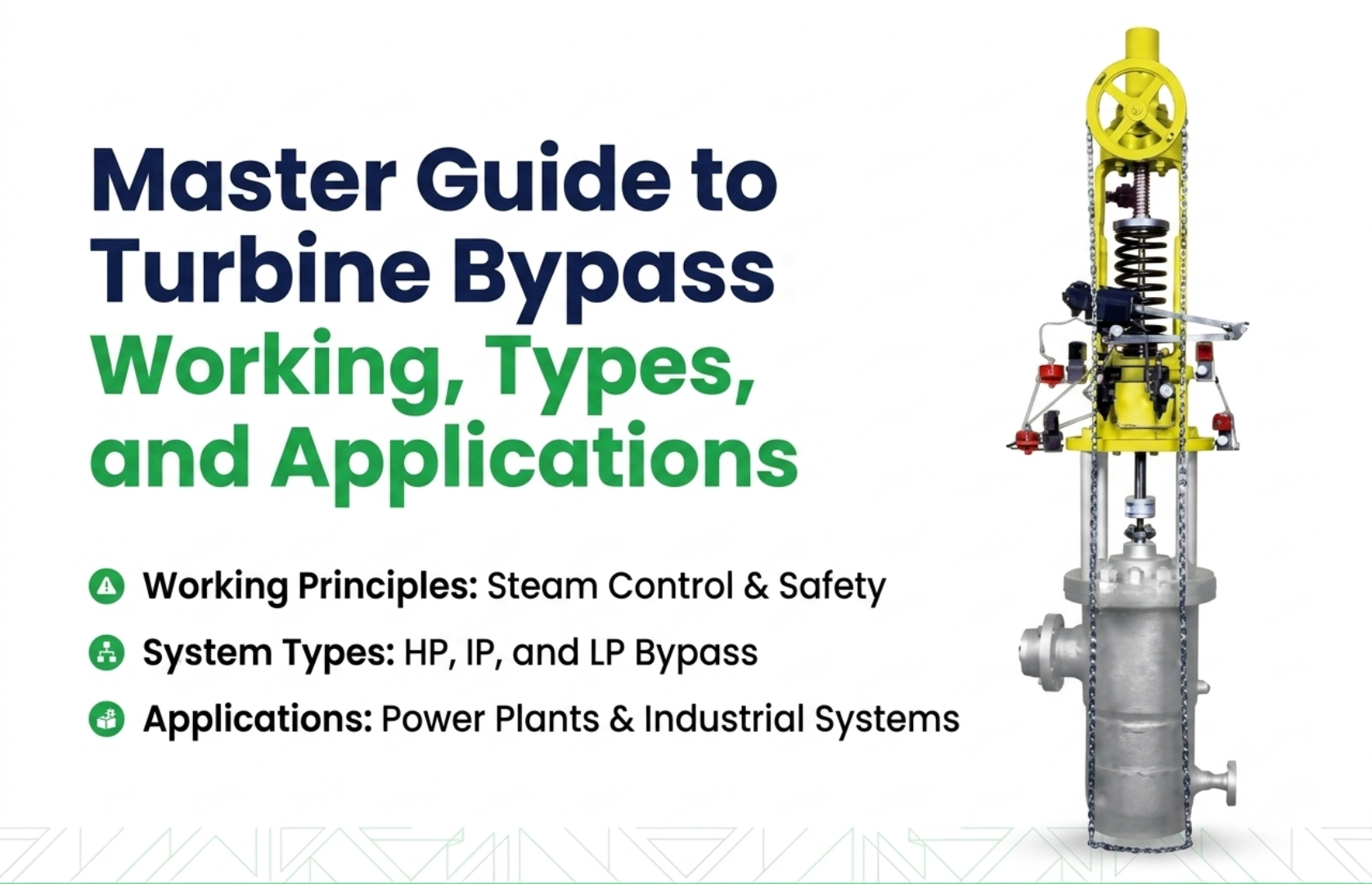
In power generation facilities utilizing steam power generation and heavy industrial facilities, it is very important to have a fine balance between the generation and consumption of steam. The moment there is an emergency shutdown or start-up of a turbine, all that steam produced by the boiler becomes surplus to requirements. Here, a turbine bypass valve system plays a vital role.
Serving as a crucial link between safety and performance, the steam bypass helps in keeping the boiler operational regardless of whether the turbine accepts the steam. Through ensuring stable pressure and temperature levels, the steam bypass minimizes equipment breakdowns, reduces start-up time, and maximizes thermal efficiency.
What Is a Turbine Bypass Valve System?
A turbine bypass valve system is an engineered network of automated control valves and cooling systems created to divert steam around a steam turbine directly to a downstream receiver, such as a reheater or condenser.
Steam, which normally goes through the blades of the turbine to produce electricity, is diverted using the turbine bypass control valve due to excess energy produced. The main role of this valve is to protect boiler machinery from overpressure and protect condenser machinery from overheating.
Core Components and Functions
| Component | Function |
| Turbine Bypass Valve | Diverts excess steam away from the turbine to protect the blades. |
| Desuperheater system | Injects cooling water to reduce steam temperature to safe levels. |
| Spray Water Valve | Precisely controls the flow rate of cooling water into the steam. |
| Actuator | Provides the rapid mechanical force needed to open or close the valve. |
| Control System | Automates operation based on real-time pressure and temperature data. |
Why Is a Turbine Bypass Valve System Important?
A modern power plant requires flexible capacity, fast ramp-up and safety margins. There are many benefits of installing a steam bypass system that is designed by experts such as Jet Flow Technologies.
Protects Turbine Equipment
A sudden reduction in the electrical load causes overspeeding of the turbine. The bypass valve instantly gets activated and diverts the steam away from the turbine to save it from any mechanical damage.
Prevents Boiler Overpressure
Boiler fires take time to extinguish. In case the turbine refuses steam, there is an instantaneous rise in pressure. The bypass valve functions as a dynamic relief valve, reducing pressure before the mechanical safety valves have to vent treated water and energy.
Supports Fast Startup and Shutdown
During startup, the steam produced by the boiler does not yet meet the stringent temperature and purity necessities of the turbine. A bypass system enables the boiler to reach its target parameters by dumping sub-standard steam directly to the condenser, significantly driving the plant startup curve.
Improves Plant Reliability
By founding a constant flow loop during transient states, the system avoids thermal shocks within the boiler tubes. Jet Flow Technologies designs these systems to decrease plant downtime and remove unnecessary trips.
Main Components of a Turbine Bypass Valve System
A high-performance system relies on the seamless integration of several heavy-duty components:
- Turbine Bypass Valve: The primary throttling element designed to handle severe pressure drops.
- Desuperheater system: Cools the throttled steam using a Fixed Area Nozzle Steam Desuperheater or variable spray nozzles to match downstream design temperatures.
- Spray Water Control Valve: Regulates high-pressure injection water to ensure complete evaporation and precise temperature control.
- Hydraulic or Pneumatic Actuator: Delivers fast-acting response times (often under 1 to 2 seconds) during emergency trips.
- Instrumentation and Control System: Transmits real-time pressure and temperature loops to the distributed control system (DCS).
How Does a Turbine Bypass Valve System Work?
The operational cycle of a turbine bypass valve or bypass assembly adapts to different plant states:
- Normal Operation: The bypass valve remains tightly shut. Total steam flow passes through the turbine to produce power.
- Turbine Startup: The boiler fires up, and steam is bypassed around the cold turbine until the steam reaches the precise temperature and pressure required for rolling the turbine.
- Turbine Trip Condition: Upon a trip, the turbine stop valves close instantly. The turbine bypass control valve opens within milliseconds to accept the full steam load, preventing a boiler trip.
- Pressure Reduction: The valve throttles high-pressure steam down to the lower design limits of the condenser or reheat line, acting as an automated steam pressure reducing valve.
- Steam Desuperheating: Throttling increases steam velocity and retains high enthalpy. The desuperheating system sprays fine water droplets into the steam flow to lower its temperature.
- Steam Discharge: The conditioned, low-energy steam is safely discharged into the condenser or cold reheat line without damaging internal structures.
Types of Turbine Bypass Valve Systems
Power plants use a combination of bypass systems on the basis of precise pressure phases of the cycle.
High Pressure (HP) Bypass System: The high pressure bypass valve routes main steam from the boiler outlet around the high-pressure turbine stage directly into the cold reheat piping. This protects the boiler’s superheater tubes by maintaining a minimum continuous steam flow.
Low Pressure (LP) Bypass System: The low pressure bypass valve takes steam from the reheater outlet and diverts it around the low-pressure turbine stages directly into the steam condenser. This system protects the condenser shell from excessive thermal expansion.
Combined HP-LP Bypass System
In contemporary combined-cycle power plants, an unified HP-LP configuration handles both stages concurrently. This ensures complete independence between boiler operation and turbine generation.
System Comparison
| Feature | High Pressure Bypass Valve | Low Pressure Bypass Valve |
| Steam Source | Main Steam (Live Steam) | Reheated Steam |
| Destination | Cold Reheat Line | Condenser |
| Pressure Level | Supercritical / High Pressure | Intermediate / Low Pressure |
| Application | Boiler and Superheater Protection | Condenser and LP Turbine Protection |
Types of Turbine Bypass Valves
Selecting the physical valve body depends on the severe service requirements of the plant.
Globe Type Turbine Bypass Valve
A conventional linear motion valve applies a tortuous path plug-and-cage design. It provides excellent throttling control and high mechanical stability under steady-state conditions.
Angle Type Turbine Bypass Valve
The preferred geometry for severe service steam conditioning. The 90 degree turn enables steam to expand efficiently, directs the fluid energy away from pressure-retaining walls, and simplifies the downstream installation of a Fixed Area Nozzle Steam Desuperheater.
Multi-Stage Trim Valve
Features a specialized cage with manifold concentric rows of holes. This design splits the steam into smaller streams, staging the pressure drop to prevent sonic velocities, severe erosion, and structural vibration.
Integrated Pressure Reducing and Desuperheating Valve
Also commonly known as a pressure-reducing and desuperheating station (PRDS), the system involves a combination of pressure reduction and water injection through one valve body only. In this case, water injection takes place inside the high velocity and turbulent part of the valve trim.
Common Challenges in Turbine Bypass Valve Applications
Bypass systems operate under some of the most punishing environments in the industry:
- High Temperature Steam: Operating at temperatures exceeding 540 degree celcius causes rapid thermal expansion and stresses valve materials.
- Severe Pressure Drop: Dropping pressure from over 170 bar to near-vacuum conditions creates high kinetic energy.
- Noise and Vibration: High-velocity steam generates acoustic noise levels that can exceed 110 dBA if not mitigated by multi-stage trims.
- Thermal Shock: Rapid transformation from cold standby to full steam load induces extreme thermal gradients across the valve casing.
Applications of Turbine Bypass Valve Systems
- Thermal Power Plants: Subcritical and supercritical coal-fired stations use large-capacity bypass stations.
- Combined Cycle Power Plants (CCPP): Gas turbine exhaust drives heat recovery steam generators (HRSGs) that rely on bypass valves during fast gas turbine ramp-up phases.
- Refineries and Petrochemical Plants: Industrial cogeneration plants use a pressure reducing and desuperheating station to balance the plant’s internal electrical grid with process steam networks.
- Fertilizer and Pulp & Paper Mills: Ensures constant steam header pressure when downstream process demands fluctuate wildly.
How to Select the Right Turbine Bypass Valve System
When procuring a system, engineering teams must evaluate several critical variables:
- Inlet/Outlet Parameters: Exact minimum and maximum steam pressure, temperature, and flow rates.
- Response Time: Hydraulic actuators are required for rapid trip protection (less than 2 seconds), while pneumatic systems suffice for general pressure control.
- Turndown Ratio: The system must accurately control low flows during startup and peak flows during a trip.
- Valve Trim Design: Multi-hole cages prevent cavitation and control noise.
Why Choose Jet Flow Technologies for Turbine Bypass Valve Solutions
As a specialized manufacturer of severe service control valves, Jet Flow Technologies provides highly engineered steam conditioning solutions tailored to modern industrial demands.
Jet Flow Technologies provides custom-made pressure reduction and desuperheating stations designed to reduce noise, prevent thermal shock and increase the life expectancy of the components used. Using the latest technology through the use of multi-stage trim designs together with their precision manufactured Fixed Area Nozzle Steam Desuperheaters, Jet Flow Technologies guarantees consistent operation in unpredictable operating environments. For those in need of maintenance friendly and fast system response systems, Jet Flow Technologies is your solution.
Frequently Asked Questions
1. What is the purpose of a turbine bypass valve system?
It diverts steam around a turbine during startup, shutdown, or trip conditions to protect both the boiler and turbine from pressure and temperature excursions.
2. What is the difference between HP and LP bypass systems?
An HP bypass handles high-pressure main steam and redirects it to the cold reheat line, whereas an LP bypass routes lower-pressure reheated steam directly into the plant condenser.
3. Why is desuperheating required in turbine bypass applications?
Throttling steam through a valve reduces its pressure but leaves it highly superheated. Injection water from a desuperheating system is required to lower the temperature to protect downstream piping and condenser structures from thermal damage.
4. How quickly should a turbine bypass valve respond?
During a turbine trip, the turbine bypass control valve must open within $1$ to $2\text{ seconds}$ to absorb the massive energy spike and prevent the boiler from tripping on high pressure.
5. Can turbine bypass valves improve plant efficiency?
Yes. By allowing the boiler to remain operational during brief turbine interruptions, they prevent total plant shutdowns and reduce the significant energy and fuel costs associated with restarting a cold boiler.