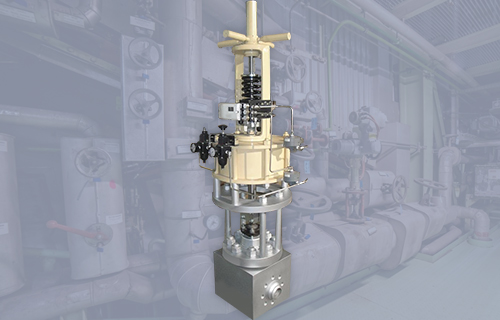
Basic Principle of Steam Jet Ejector:
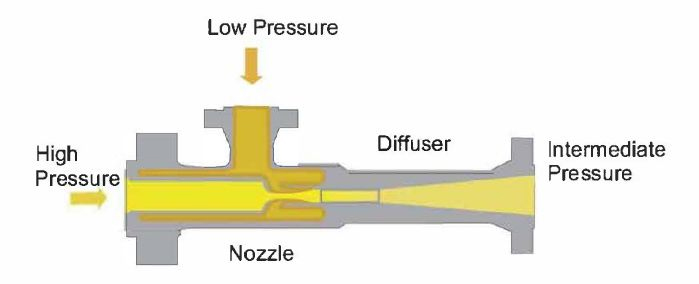
A steam jet ejector generates vacuum by utilizing the Venturi effect. High-pressure motive steam is expanded through a nozzle, where its pressure energy is converted into kinetic energy. This high-velocity jet entrains and withdraws gases, air, and water vapor from the process system, thereby establishing or maintaining a sub-atmospheric pressure. The combined stream is then compressed in a diffuser and discharged.
Steam jet ejectors are particularly effective in wet processes requiring deep vacuum levels, typically ranging from 15 mbar down to 0.1 mbar absolute. Unlike water ring pumps, which cannot achieve such low pressures, ejectors provide reliable performance without moving parts. Vacuum technology is widely applied in the chemical, food processing, and pharmaceutical industries, enabling operations such as distillation, drying, concentration, and freeze-drying that are not feasible under atmospheric conditions.
Type of Ejectors :
An ejector is a static device that produces vacuum using a high-pressure motive fluid (steam, gas, or liquid). By releasing pressurized fluid through a nozzle, the ejector can:
- Aspire, compress or mix fluids
- Create vacuum or pressurized enclosures
- Transfer fluids, powders, or slurries
- Facilitate heat transfer
Because of these versatile functions, ejectors are known by different names depending on their application, such as thermocompressors, eductors, mixers, heaters, scrubbers, hydroejectors, and more.
Type of Ejectors in terms of number of nozzles :
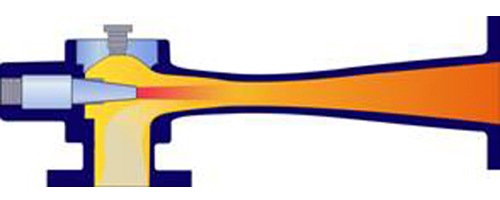
Single Nozzle Ejectors
Single-nozzle ejectors are designed for either critical or non-critical flow, typically optimized for one set of operating conditions. They are generally used where very large compression ratios are required.
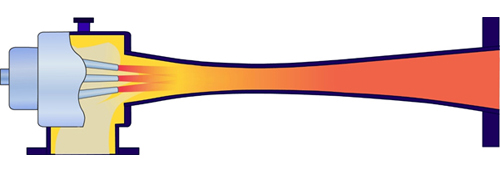
Multi-Nozzle ejectors
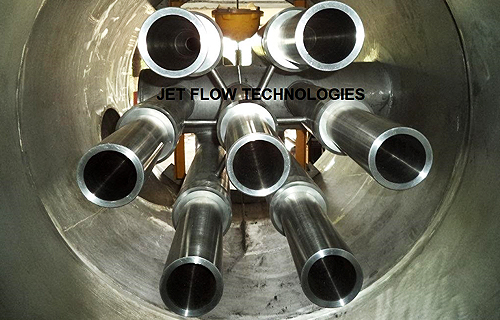
Multi-Nozzle are configured with five or seven nozzles, usually arranged with one central nozzle surrounded by evenly spaced peripheral nozzles. They can reduce steam consumption by 10–20% compared to single-nozzle ejectors under the same operating conditions, making them more efficient. In addition, they are often shorter in length than equivalent single-nozzle designs.
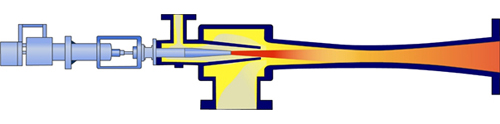
Variable-Flow Ejectors
Variable Flow Ejectors are pneumatically or electrically operated single-nozzle ejectors. They use a movable needle to precisely control flow rate based on pressure requirements, allowing them to handle variable suction and discharge conditions. These are particularly useful when compressing low-pressure steam to higher pressure levels.
Multi Stage Ejector System
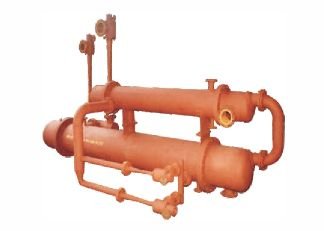
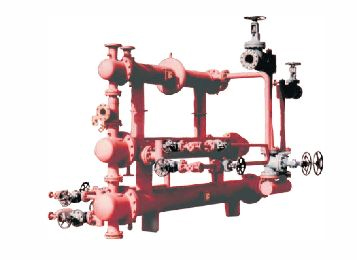
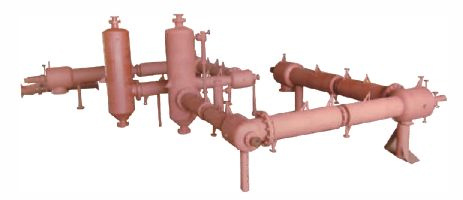
A single-stage steam ejector can only achieve limited vacuum levels. For deeper vacuums, multi-stage ejectors are employed. Each successive stage lowers the pressure further, enabling very high vacuum levels. The first ejector stage receives the entrained gases, followed by subsequent stages in sequence. Inter-condensers are installed between stages to condense steam and condensable vapors, reducing the load on the following stage. An after-condenser is connected to the final stage discharge to prevent the release of motive steam and condensable vapors into the atmosphere.
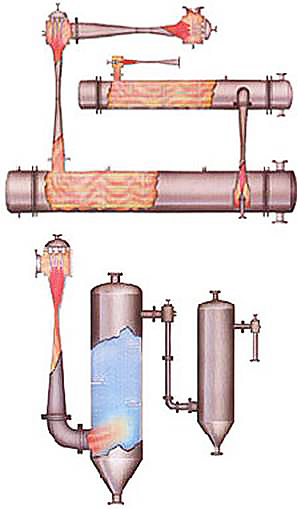
It is desirable to connect a condenser to the discharge of each steam jet ejector to bring all steam and condensable gases to the liquid state, reducing the load to the succeeding ejector stage and thus imposing on subsequent stages the work of compressing only those gases that are non-condensable. The condensers so employed are known as inter-condensers. A condenser connected to the diffuser discharge of the final stage is known as an after-condenser, that is used to prevent the discharge of motive steam and condensable process vapours into atmosphere.
Material of Construction : Ejectors can be manufactured from a wide range of materials depending on process requirements, including:
- Metals: Carbon steel, stainless steel (304L, 316L), special alloys (Uranus, Monel, Hastelloy).
- Non-metals: Graphite, plastics (PVC, PPH, PVDF, PTFE).
Codes and design standard : Design and fabrication typically follow standards such as ANSI, ASME VIII, CE Norms, TEMA, and JFT’s internal guidelines.
Connection type : Connections can be customized as required: flanged (ISO, DIN, ANSI), threaded, or welded.
Benefits of Jet Flow Ejectors :
CUSTOM DESIGN AND MANUFACTURING: Thank to our resources which have been validated by thousands of achievements, we provide well sized ejectors for each specific application, ensuring optimum performance (and security) at
competitive prices.
HIGH PERFORMANCE: The specific profiles of our ejectors guarantee maximum efficiency for a reduced operating cost.
EXCEPTIONAL RELIABILITY: due to the lack of moving parts, no breakdowns, no decrease in
performance, a low maintenance cost.
WIDE RANGE OF RATES: An unlimited suction capacity.
WIDE RANGE OF PRESSURE: Our ejectors can also be used to make a vacuum within a chamber (up to 10 -2 mbar abs.) or
use as compressors for several dozens of bars.
CORROSION RESISTANCE: Ability to aspirate any fluids, even abrasive or corrosive thanks to the diversity of building materials that we offer.
Get a Quick Quote